giovedì 31 marzo 2011

Fly Fishing Accessories

Fly Fishing Accessories

In addition to the clothing and your balanced outfit there are many accessories that you should have for fly fishing. Some of these accessories may seem strange, but when wading, it is necessary to have all of your gear and tools with you.

You already have your fly fishing vest with plenty of large pockets, because that is part of a fly fisherman's basic wardrobe. You might want to put a patch of sheepskin on the front of the vast where you can keep alternative flies handy. You should also have a spring-loaded retractable spool that attaches to your vest to hold a pair of nail clippers. They come in very handy for trimming knots. You might want to attach a patch of rubber for straightening leaders. Ideally, the vest should have a large back pocket to carry light rain gear. Some vests also have a ring at the back of the collar, where you can attach the net to keep it out of the way.

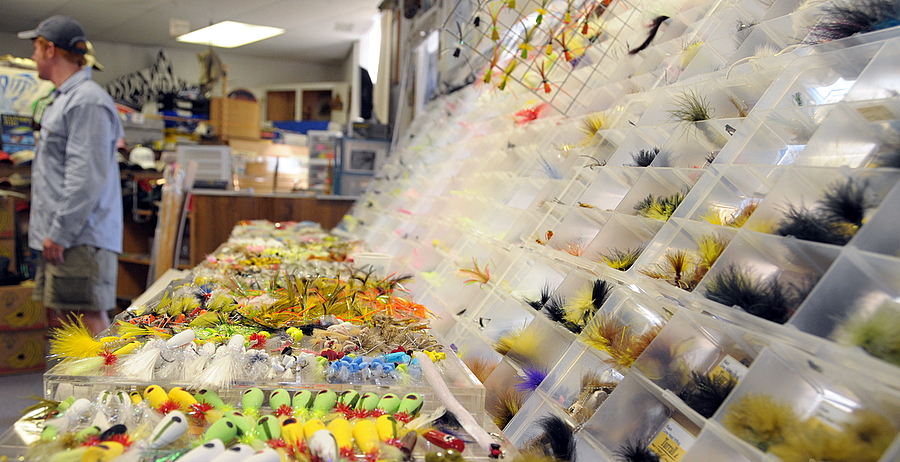
The choice of your fly boxes is very important. One should have large compartments where you can store dry flies without crushing their hackles. You should also have one or two smaller boxes with foam linings and metal clips. These are for holding your wet flies, nymphs, and streamers. Having a couple of small vials to hold your dry of flies after catching a fish also comes in very handy.

A spare spool for your reel, already loaded with backing and line, is a good idea to have with you. Also a few spools of monofilament leader material, a leader wallet, a sharpening stone, and a Swiss Army knife are important for the fly fisherman to have within easy reach.

Insect repellent is essential when fly fishing. The main ingredient in many insect repellents is DEET, which is an industrial solvent and can damage the varnish on your fly rod, eat away the finish on your fly line, weaken your leaders and destroy your rain gear. If you do use an insect repellent with DEET be very careful of what it touches and try to limit its use. There are many products today that do not contain that solvent.

Having a good pair of polarized sunglasses will help you to see the fish and protect your eyes from the damaging rays of the sun. It's also important to have a small pocket flashlight with a flexible neck. This can be very useful for many things including changing flies at dusk or dawn. Other useful items include a thermometer, a small container of split shot, a good knife with several blades, and a small first aid emergency kit.

Many fishermen like to take a collapsible wading staff with them while fly fishing. It helps them to keep their footing if they are wading in a heavy current or on a slippery, rocky bottom. A small cotton mesh net with a short handle comes in handy for netting your fish. If you intend to keep your catch a small canvas or woven willow basket for holding your fish will work well.

There are many other accessories available for fly fishing today. Many of the choices depend on each fisherman's personal preferences.

martedì 29 marzo 2011

Fly Fishing Shop

Fly Fishing Shop

There are many shops that cater exclusively to the sport of fly fishing. Whether you are looking for them in your hometown or online, you can find plenty of places to shop for your fly fishing supplies.

Amassing your fly fishing gear doesn’t have to be a headache. There are many places that sell supplies and apparel for fly fishing – all you have to do is look for them. Shopping for fly fishing gear can be a very enjoyable expedition albeit an expensive one. But when you love a sport, you will want to have the best equipment you can find.

Online fly fishing shops offer you the convenience of shopping from your home and they will deliver your product right to your door. You will have many more choices when you shop online, and the selection will be everything you could ever think of. Following are a few of the websites we’ve found that offer a wide variety of fly fishing supplies.

The Fly Fishing Shop (www.flyfishusa.com) has both an online store as well as a brick and mortar shop in Welches, Oregon. They offer everything from rods and reels to pontoon boats. They have been in business for over twenty-two years and even offer free shipping for orders over $50.

The Orvis Company (www.orvis.com) has long been a well-known manufacturer of quality fly fishing equipment, and their online shop offers all kinds of supplies for the fly fisher. They have clothing, gifts, and collectibles as well as home furnishings and hunting supplies.

The Hook and Hackle Company (www.hookhackle.com) has just about everything in their shop that a fly fisher would need. They have an extensive amount of fly tying supplies plus separate parts of fly fishing rods so you can build your own rod. They also offer waders, footwear, and much more.

Like many other online fishing shops, Angler’s Lane (www.anglerslane.com) also has a storefront in Virginia where they sell their fishing supplies. You can order rods, reels, flies, and clothing from their online shop, too. They have a special section with products on sale and boast discounted items daily.

There are a lot of fly fishing shops out there. While it can be much more satisfying to be able to pick up a rod and know how it feels in your hand, you can often find some great deals through an online shop plus you’re likely to find less expensive merchandise.

sabato 26 marzo 2011

Fly Fishing Reels

Fly Fishing Reels

Your fly fishing reel can be as important as your fly fishing rod. At one time, many people thought of the fly fishing reel as just storage for your line, but it has evolved into so much more. The reel can make a big difference in being able to drag in your fish or failing to do so.

Most fly fishing reels are made of aluminum. When using, the fisherman strips line off the reel with one hand while casting with the other. He (or she) then retrieves the slack line by winding it back up on the reel. The type of reel you use depends on the fish you are trying to catch. Some reels are better suited for larger fish as well as more demanding conditions while on the water.

Your fly fishing reel should have a solid handle that is easy to manipulate. Some reels come with double handles – one on each end of the spinner – that makes it much easier to grab hold of and wind up. Which one you choose is up to you!

The spool holds the fishing line. Attached to the spool on the outside is a small weight called a counter balance. This assures that the reel spins smooth and true without any interference from the rod or the angler. Many spools have exposed rims. This actually serves a very useful purpose when you are struggling with a fish. You can cup your hand on the outside of the room so you can play with the fish and save your tackle if you are using light flies.

The drag on a fly fishing reel creates pressure and prevents the line from free spooling or back lashing. You can have a click drag on your reel which are springs that put pressure against a gear stopping it from moving. These reels are noisy, though, so keep that in mind. Disc drags are either pads or gears that have calipers like brakes on a car. As the pressure on the gear increases, the pad clamps down stopping the drag.

The reel clamps to your fly rod with a “seat” that clamps down on the handle with “feet”. All reels are made to the same standard so the seats that are on fly fishing rods with handle all fly fishing reels. So, basically, you can pick out your rod and then choose the reel you want and not have to worry if it will fit your rod.

Choosing your fly fishing reel depends a lot on what type of fishing you will be doing. If fishing for large game fish, you will want one that can handle the pressure of the weight of the fish. If you are just fishing for trout and bass, you will want a standard reel that will make bringing your fish in just a little bit easier.

mercoledì 23 marzo 2011

Fly Fishing Gear

Fly Fishing Gear

The term “fly fishing gear” can be used to refer to a lot of parts of your fly fishing supplies. In this article, we’ll discuss various piece of fly fishing gear that are important to have on hand. You already know you need a rod and reel, but there’s so much more involved in your fly fishing gear.

Of course, you’ll need to have a variety of flies to use as bait for the fish. Flies are meant to mimic the look and movement of a fish’s natural food source. Some fish prefer different flies, and when you use what they are used to eating, your chances are better of landing a bite. Keep several different types of flies close at hand so you can choose the right fly for the specific fish you are angling for.

You will also need to have several different weights of lines so you can switch them out if you find yourself in waters with larger fish. Of course, your fly rod has a lot to do with what line to use, but if you have an 8 nwt rod and are finding some 10 pound fish, go ahead and switch to a 10 nwt line to increase your chances of winning a fight with that prize-winning trout.

Part of your fly fishing gear includes what you wear while fishing. You’ll need to have a good pair of waders so you can keep dry while going after your fish. Pick a pair of waders that will meet your fishing situation. Chest high waders are usually a good choice because they allow you to wade in all depths of water.

You will also need a fishing vest with lots of pockets that will hold your flies, line, and other pieces of gear. The pockets should fasten with Velcro so that you have easy access to what you need. You don’t want to be on the water and realize you need a different fly only to miss out on a passing school of fish because you were fumbling with your pockets.

A good pair of fishing pliers is almost a necessity. Many rivers and streams are exclusively catch and release water. That means that once you catch the fish, you need to let it go. This helps propagate the population and promote healthy fishing at all times. You will want an easy way to get the hook out of the fish’s mouth without causing harm to its body. Fishing pliers are designed to do just that.

Finally, your fly fishing gear should include a waterproof camera. If you are lucky enough to land a whopper, you’ll want to document it as part of your prize!

When you are amassing your fly fishing gear, things can eventually get out of hand. Many fly fishermen have an abundance of gear with the possibility that they might need something specific in a certain situation. That’s just fine, but the essentials that are listed above are a start!

martedì 22 marzo 2011

Alaska Fly Fishing Lodges

Alaska Fly Fishing Lodges

Alaska is well known for its incredible fly fishing, but it’s also a great place to go for a fly fishing vacation in a rustic lodge setting. You can find all kinds of lodges in the rustic country of Alaska that can make your fly fishing vacation a real adventure. This article will outline a few of these great destinations.

The Alaska Rainbow Lodge claims to have the finest, most centrally located accommodations in Alaska. A short flight from Anchorage will put you in the middle of prime fly fishing territory. You can fish for rainbow trout and salmon and stay in a gorgeous lodge with all the amenities. They offer float planes to their guests that will take you to some of the most remote fishing areas where you will find quality fishing in any season. They can be found online at www.alaskarainbowlodge.com.

Wilderness Place Lodge offers some excellent fly fishing accommodations along with some terrific amenities. They have guides that will lead you to the best place to fly fish for salmon or trout and boast riverside cabins and a 1:1 customer/guest ratio to insure excellent service during your stay there. They also offer classes to their guests on topics like fly tying and effective casting. They can be found online at www.wildernessplacelodge.com.

The Lake Marie Lodge is another option for your fly fishing vacation. They specialize in rainbow trout and salmon fly fishing as well as sight fishing and surface fishing. Their experts offer fly fishers the opportunity to catch huge salmon and they fish all sorts of rivers and streams that are accessible to them only. They average about 14 guests at a time which allows them to provide the utmost in service. Their web address is www.lakemarie.com.

The Alagnak River is known for its excellent fly fishing, and if you’re looking for a quality lodge located on the river, you may want to look at the Katmai Lodge. They have single, double, or private cabins that adjoin a common area where you can gather to share “fish stories” after a day of angling. They also offer Orvis sanctioned fishing expeditions that are led by some of the most experienced guides in the area. Research them online at www.katmai.com.

When you are considering an Alaskan fly fishing vacation, you will want to find a lodge that can comfortably accommodate those in your party. The choices are many, and you will want to do your research before you book your trip. But most of these Alaskan lodges are committed to making your fly fishing trip the best you’ve ever had.

lunedì 21 marzo 2011

Fly Fishing Books


Although experience is a great teacher when you are learning about fly fishing, you may also want to look into the myriad of books that are available on the topic. Fly fishing involves a lot of things, and you’ll need to know about these things if you’re going to be effective in the sport. Fly fishing books are a great way to start learning!

A quick search on Amazon.com shows over 8,000 titles on fly fishing available! Prices range between $10 and $50. Some of these books are purely instructional while others contain anecdotes and fish stories designed to entertain. You can get books that tell you the best places to fish at and the most satisfying fly fishing destinations.

Fly fishing books are great resources as well if you want to learn how to tie your own flies. One of the first things you need to know in fly tying is what the flies look like that you’re trying to mimic. When the book comes with illustrations, you can easily match your fly to the picture.

Online books are another great way to get information about fly fishing. There are many e-books available for download. Look for the ones that will fit your needs. If you’re a beginner, you may want a comprehensive guide to all aspects of fly fishing. If you’re more experienced, an update book may be the way to go.

When choosing a fly fishing book, look at the author first. Are they qualified to write this book? What experience do they have in the sport? Can they provide you with compelling reasons to take his or her advice? You will get more accurate information from a person who has personal experience to offer.

Is the book easy to read? When you are reading a book filled with technical language, it can be overwhelming and it isn’t likely to help you much. The author should define unfamiliar language early on in the book and keep reminding you throughout the text what they are referring to.

Don’t opt for long winded tomes of pages akin to War and Peace. They aren’t likely to give you much good advice plus the boredom factor has to come into play. A lot of great information can be packed into a few pages. Opt for the shorter book rather than the longer one so you get what you pay for!

Fly fishing books are wonderful sources of information when you are learning about this sport. Find a book that you are comfortable reading that also gives you what you are looking for. The choices are vast, so go online or get to the bookstore today and learn what you need to about the sport of fly fishing!

mercoledì 16 marzo 2011

Fly Fishing Gifts

Fly Fishing Gifts

Are you looking for the perfect gift for the fly fisher in your life? There are many options you have when giving a gift to the person who loves fly fishing. Some of them can be expensive, but they don’t have to be. You can choose a gift that your fly fisher will love no matter what your budget is.

One option is to get them a new rod and reel. This is going to be one of the more expensive options as reels can run anywhere from $200 to $1,000. Buying a rod can be a very personal decision for people who love fly fishing, so if you’re going to go this route with your gift, you’ll need to do your research.

You could purchase a gift certificate to your local sporting goods or fishing store. This is a great choice for the fly fisherman as then they can pick out what they want or need. While some people feel gift certificates are impersonal, they can be a very welcome gift to the fly fisher.

Consider getting a nice basket and filling it up with various fly fishing supplies. You can stock it with various flies, lines, and tools that your fly fisher can use during their fishing trips. If you’re not sure what types of flies and such to stock the basket with, just ask the clerk at the store, or simply go hog wild and pick out a nice variety.

There are other beautiful gifts you can get as well. People who love fly fishing have a natural love of the outdoors and everything “fishy”. The organization Trout Unlimited has a great selection of fly fishing gifts including mugs, glasses, shirts, and hats with fish pictures on them. This can be another great gift idea.

Fly fishing apparel is just as important to the fly fisherman as the equipment they need. Fly fishing requires waders, vests, and boots. A good fly fishing vest can make a very thoughtful gift. Most fly fishermen claim you can never have too much equipment. Even if your fly fisherman has a vest, a new one might be just the ticket for a good gift.

When giving a fly fishing gift, use your imagination. There are all sorts of great gift ideas that can please even the most experienced fly fisherman. Ask him or her what they are wishing for and then fill that wish. You have lots of options. When giving a gift, it’s the thought that counts, of course, but when you consider all that’s involved in the sport of fly fishing, you’re sure to find a gift that’s more than appreciated!

lunedì 14 marzo 2011

Fly Fishing Catch and Release


Once you make the decision that you want to become part off the world of fly fishing, you have to then decide if you are going to keep your catches or release them back into the water safe and sound. Some fishermen keep all the fish they catch, others release all that they catch, and some choose to use a combination of the two.

These fly fishermen keep only what they are going to eat, or give to other people to eat, and release all of the other fish they catch.

If you decide to practice fly fishing using the catch and release method, it is very important that you crush the barb of the hook you are going to use. The other choice is to use a hook without barbs. This is done to avoid any unnecessary injuries to the fish. It is also important to keep the fight as short as possible so the fish does not become overtired. At the first opportunity, bring the fish to hand but do not take it out of the water. While holding it under the water, remove the hook using a pair of fishing pliers.

If the fish seems to be too tired to swim away, hold it gently just under the surface of the water with one hand around its caudal wrist, which is just ahead of the tail. With the other hand, support the fish under its belly. Rock the fish gently back and forth making sure that the water enters its mouth and flows over its gills. Using this method, the fish should gain its energy back quickly. When you feel the fish try to pull away, gently release your hold on it. Using the catch and release method of fly fishing can be very rewarding.

Often fishermen believe they should release the smaller fish that they catch and keep the larger ones. They might not be aware that the larger fish usually represent the more genetically suitable spawners. They are the ones that are the most valuable fish for keeping a healthy species. It is wiser to keep the smaller fish to eat and release the larger ones back into the water.

Some people while fly fishing, feel that it is all right to catch as many fish as possible as long as they release them all. However, catch and release is not foolproof. Many fish are injured during the process and some even die. At times, even though the fisherman doesn't keep any of the fish he catches, the overall fish mortality rate for that day is higher then if he had caught and kept the legal limit. Most fish, even if they are not physically injured, will sulk for a while after they have been released because of the trauma of being caught and released.

Catch and release fly fishing can be a wonderful way to experience the sport. Every release of a fish contributes to the conservation efforts that ensures the future of having future stocks of fish.

venerdì 11 marzo 2011

Fly Fishing Guides

Fly Fishing Guides

Fly fishing has grown in popularity over the years to the point it is at now – an almost obsession for many avid outdoorsmen (and women!) When looking for a guide to fly fishing, you need to find one that will cover both the basics along with the advanced techniques. There is no one way to fly fish right or wrong. It takes practice and persistence, but you will find an amazing recreational value when you take up this sport.

Fly fishing isn’t a complicated sport, but if you can find an expert to guide you along the way, you will become a better angler. Looking for a fly fishing guide can be a huge undertaking as there are all kinds of informational books and websites on the market that can help you along the way.

A good guide to fly fishing is one that will tell you about the most basic casting maneuvers, how to pick out a fly rod, and where to look for the best fish. A good guide will teach you rather than lead you. When you learn how to do things, you will become a better sportsman (er, person).

In the sport of fly fishing, the word “guide” can have a double meaning. You can look for a printed guide to teach you how to fly fish, or you can hire a guide, who is a person, to show you the best places to fish in.

When hiring a competent fly fishing guide, you need to consider his or her qualifications. What type of experience do they have on those particular waters? How familiar are they with the area? Are they able to offer you tips and tricks on how to find the biggest fish?

Many lodges will offer up the services of their own fishing guides when you book a cabin or vacation with them. These fly fishing guides are very valuable resources when you are on a fly fishing trip. These guides are included in the price of your stay, and they often know certain nuances of the area that no one else can offer you. You should definitely take advantage of any fly fishing guide that your lodge offers you.

A printed guide to fly fishing, as we’ve said, will offer you information about even the most basic of techniques. They can also guide you towards the best fly fishing destinations to make any trip you take a success.

Whether you’re looking for a fly fishing guide who is a person or a printed fly fishing guide, you’ll need to consider your options before buying or booking. Fly fishing guides can mean the difference between a good trip and a great trip!

giovedì 10 marzo 2011

Texas Fly Fishing

Texas Fly Fishing

Fly fishing in the state of Texas doesn’t have the common popularity as a location of choice when it comes to experienced fly fishers. Many people think the rivers and streams of classic mountain country are the better choices. The truth is that you can find some amazing fly fishing in Texas – when you know where to go.

Texas contains approximately 80,000 miles of rivers and streams, comprising forty-one major waterways. These waters range from clear, fast-flowing hill country streams to turbid, slow-moving bayous. Fishing success often slows on Texas reservoirs during the summer, but may remain excellent on Texas rivers.

Rockport, Texas, is a great place to fly fish in salt water. There are seven major bay systems that dot the Texas coastline which makes it a great fly fishing destination. Sea grass carpets much of the shallows in the bay system providing an ideal hiding place for fish as well as acting as an incubator for new fish. It also acts as a filter draining out impurities and making the living environment perfect for fish like speckled trout, red fish, black drum, and flounder.

You will find some amazing trout fishing along the Guadalupe River. This river is located between Austin and San Antonio and is the southernmost fresh water trout fishery in the United States. The river is stocked with many varieties of trout. They have a catch and release regulation on the river to help keep the trout plentiful from year to year.

When fishing the Guadalupe, keep in mind that many of the best spots are accessible only by crossing private lands. You can often find people who are more than willing to allow you access, but be prepared to pay a small fee to do so. There are some public access points you can take advantage of, however, so look for these first.

The Blanco River is a classic hill country river varying from a deep, wide river to merely a trickle in places. The banks are lined with cypress trees which makes the scenery along this river absolutely beautiful. Species you can fish for here include a variety of bass and perch. Access is easy and the fishing is good year-round.

The major drainage flowing through Texas hill country is the Colorado River located about 60 miles north of Austin. During the winter and the spring, the bass are plentiful as they migrate out of Lake Buchanan and up the river. You will have to pay a small daily fee to fish the Colorado, but it’s well worth your time and money!

While many people don’t think of Texas as prime fly fishing country, it actually is a great place to fish for bass and trout. Once the word gets out about the great fly fishing in Texas, it’s only a matter of time before it ranks right up there with Colorado and Washington in popularity.

mercoledì 9 marzo 2011

Fly Fishing

The sport of fly fishing has been around for years and years.  In medieval times, anglers fished for food, but the sport has evolved over the years to become a real test of skills.  Anyone who has become involved in the sport of fly fishing knows how addictive in can be – but in a very good way!

Fly fishing is markedly different from regular fishing.  With plain fishing, you use lures and often live bait to bring fish to your line and hook them.  When you are fly fishing, you use a fly that resembles a real insect that the fish feed on naturally.  The line is longer and you mimic the movement of the fly or insect on top of the water so that the fish thinks they are biting at a real insect.

Casting is constant in fly fishing.  You put the fly out in the water and then draw it back several times so that the fish thinks the fly is landing on the water and then taking off again.  With regular fishing, you cast your line and let it rest until the fish bites making the bobber sink into the water.

You can catch some pretty hefty fish using either method, but when you are fly fishing, you have the opportunity to “battle” the fish for survival.  This can be extremely satisfying as man battles nature for the top position.

Flies are made out of natural materials in fly fishing while regular fishing utilizes latex and plastic lures made out of man-made materials.  Many avid fly fishermen say that the fish are much more attracted to the natural lure rather than the man-made ones.  This, they say, makes fly fishing an amazingly satisfying sport.

You can fish just about anywhere – a local pond, a lake, or even a reservoir.  When you are fly fishing, you will want to go where the fish are most plentiful.  That means traveling (perhaps) to rivers and streams where fish like trout and walleye are known to live.  The challenge in fly fishing lies in making the fly look real to the fish below water.

Fly fishing in remote places like Alaska and Canada are great vacation getaways.  You can plan a fly fishing trip to many different spots including Mexico, South America, and even Russia.  That can be a great adventure – much more so than just fishing your local lake or pond.

Chess has been called “the sport of kings”, but many avid fly fishermen consider fly fishing to be the real sport of kings.  It takes skill, finesse, and a lot of patience to get good at fly fishing.  Thousands of anglers couldn’t agree more.  When you’ve been fly fishing once, you’ll want to go back over and over and over again.  May the fish bite well for you!