lunedì 27 giugno 2011

Fly Fishing Equipment

Fly Fishing Equipment

Just as with any other sport, the equipment you use when fly fishing can be very important. There are various types of equipment that you need when you undertake fly fishing, and be prepared because some of it can get quite expensive!

Of course, you’ll need a rod and reel. What type of rod you choose depends on the type of fish you will be angling for. Fly rods are ranked according to their net weight capabilities (nwt). The nwt number will tell you what type of fish you will be able to catch. Fish that weigh 8 pounds will require at least an 8 nwt rod, etc. The larger the nwt number, the larger fish you can catch.

Some rods are multi-rated (e.g. 7-9 nwt). These rods are good to use because they can accommodate a variety of fish, but multi-rated rods tend to be less flexible than single rated rods.

Rods are made of fiberglass, graphite, or bamboo. Fiberglass rods are durable and less expensive. Fiberglass rods are best for beginning fly fishermen because they can be used in a variety of situations. Graphite rods are lighter and will give you more fighting weight when it comes to landing a fish. Bamboo rods can be expensive, but they are extremely strong and are suited to a more laid-back casting style.

Your fly line will need to match the nwt of your rod. If you have an 8 nwt rod, you’ll need to use an 8 nwt line. It is acceptable to go one or two sizes above or below your rod weight (i.e. 9 nwt or 7 nwt). Buy line that is strong and durable. Some lines are specially designed for freshwater, saltwater, etc.

You will also need to have a durable net that you can carry with you. After the fish has lost its will to fight, a good net is used to scoop them out of the water. This can be a big part of your fly fishing equipment because without a good net, you won’t be able to get your fish out of the water!

Having the right fly fishing equipment is important for both the beginner as well as the experienced angler. As you get better and better at the sport, you will begin to see how important having good equipment can be. You can always upgrade, so it’s good to start out small and work your way up to the more expensive stuff. Your fly fishing equipment can make a world of difference between landing that big fish or catching an ordinary one.

venerdì 24 giugno 2011

Fly Fishing for Largemouth Bass

Fly Fishing for Largemouth Bass

For fly fishing for bass can provide some of the most exciting fishing in the country. The largemouth bass is probably the most popular game fish in America. The popularity of fishing for bass is partly because no other freshwater fish has a wider distribution. Largemouth bass can be found from southern Canada to South America. Smallmouth bass are also excellent for fly fishing, but they prefer slightly cooler waters and are not as ever present as the largemouth variety.

Generally, the warmer the water, the larger the bass will grow. For example, a four or five pound bass may be large for a northern lake, but warmer southern waters regularly produce 10 pounders and better. The temperature of the water is a key factor not only in fly fishing, but in all fishing. When fishing for bass it is an especially important factor.

The best fishing will take place just after the bass have spawned, which is going to vary according to the temperatures. For largemouth bass spawning takes place when the water temperatures reached the low to mid-60s. In Minnesota for example, a female bass may not deposit her eggs until mid-June, while in Florida the female bass may spawn as early as February.

The behavior of the largemouth bass is also influenced considerably by the top temperature of the water. On hot summer days, they usually feed during the early morning hours and then again during the last few hours of daylight, when the sun isn't as bright and the water temperature is cooler. Bass are generally found in areas of the water that have a lot of vegetation and cover. They spend a lot of time near the water's edge among the grasses, reeds, and other plants.

Many fly fishermen fishing for largemouth bass use bass bugs and poppers. Poppers were designed as a surface lure to be skipped across the top of the water in a series of quick retrieves. Other good fly patterns for largemouth bass or the Muddler Minnow and the Wooly Worm. There are some fly fishermen that prefer to use streamers and bucktail.

When fly fishing for bass the fly is worked differently than it is for trout. Poppers are worked not only for their appearance but also for their sound. Generally, when a fly is cast for bass it should be allowed to remain unmoving for a longer period of time then for trout. It is estimated that 60% of bass strikes are made on a still fly. Bass tend to inspect your fly for some time before making the decision whether to take it or not. It is important to remember while fly fishing, that the warmer the water, the longer it will take the bass to take a fly.

At times fly fishermen like to tease the bass with repeated casts over the area where they think he's holding. Teasing can sometimes be a very effective method in bringing a lazy fish up for a strike when nothing else seems to work

Fly fishing for largemouth bass can be a wonderful, exciting experience.

lunedì 20 giugno 2011

Fly Fishing Lures

Fly Fishing Lures

In the general sport of fishing, you use lures to catch your fish; however, when you are fly fishing, the word lure only marginally applies. Sure, you are trying to lure the fish to your bait, but when you are fly fishing, you use flies to entice the fish. So when we talk about lures in the sport of fly fishing, we are really speaking about flies.

You see, fish eat bugs. They rely on flies, grasshoppers, and other insects for their food source. When you are fly fishing, you attempt to mimic the look and movement of their food. Therefore, the lure that you are providing them with are called flies.

There are all sorts of fly fishing lures, or flies, that you can use depending on the area you are fishing and the type of fish you want to catch. Most of these lures are available at commercial retail outlets, but you can also make them yourself. The key is to have several different lures available to you so you can adapt to the situation you are fishing in.

Take a few moments when getting on the river or stream to observe the types of insects that are around you. Take a small net like they use for goldfish and skim the top of the water. See what you collect inside and then use a lure that looks like the bugs in the net.

Whatever type of fly or insect that is predominantly in the area is what the fish are feeding on. You’ll catch more fish when you lure them with what they already know are food sources. While most fish will eat whatever they can find, if they are used to seeing may flies on top of the water, they will be more apt to bite than if you dangle a caddis fly over their heads.

Your fly fishing lures should be simple. Regular fishing lures are often huge with all sorts of shiny danglers and bright colors. They, too, are meant to mimic food sources, but the idea of fly fishing is to catch fish using the natural food that is always available. That’s why flies are kept simple looking and small.

You can lure fish to your line using a variety of tools. But when you are fly fishing, lures become one of the most important tools you can have in your arsenal. Using the right lure, or fly, is so important. It can make a big difference between catching a ton of fish or just a few. Choose your lures carefully when fly fishing and reap the benefits!

venerdì 17 giugno 2011

A Few of the Best Fly Fishing Spots in the United States

A Few of the Best Fly Fishing Spots in the United States

All across the United States there are many beautiful, exciting places that are excellent or fly fishing. The following article just highlights a few of them.

Sitka, Alaska is a major stopover for salmon heading to British Columbia, Washington, and other Alaskan waters. Fly fishermen at Sitka, have a higher fishing catch rate than any other marine area in Southeast Alaska. June is the best month for fishing this area.

The Colorado River at Lees Ferry, Arizona, is one of the best fly fishing spots for rainbow trout. The fish are comfortable all year round in a 15-mile stretch of cold water that flows from the depths of Lake Powell between Glen Canyon Dam and the upper end of the Grand Canyon. Fly fishermen can also book a guide and go flats fishing for 25 pound carp.

Saltwater fly fishing is at its best at Montauk Point, New York. Montauk Point is the easternmost point of Long Island and is best known for striper fishing. Fly fishermen have miles of beautiful shoreline in which they can cast their fly.

Gunpowder Falls, Maryland, is an excellent place to catch cold water trout. A deal was struck by the Maryland state authorities and Trout Unlimited to start cold water releases from Pretty Boy Dam. This has resulted in a combination of wild and stocked brown, brook, and rainbow trout. Most of the fly fishing is in Gunpowder Falls State Park.

Fishing Creek, Pennsylvania, is one of the states top wild trout streams. It generally stays cool throughout the summer. There is a five-mile stretch called the Narrows, near Lamar, that is a very popular area for fly fishing.

Driftless Area, Wisconsin, has many excellent fly fishing streams loaded with brown trout. There is excellent access to all of southwestern Wisconsin's eight counties. There are 68 streams in Vernon County alone, including Kickapoo River and Timber Coulee Creek. Most fly fishermen in this area use mayfly and caddis imitations.

Laguna Madre, Texas, is full of rivers and lakes that are excellent fly fishing locations. Texas also has its southern coast, which is among the world's greatest saltwater fly fishing areas. The saltwater flats of Laguna Madre, next to Padre Island, are full of all different kinds of fish that make for a great fly fishing experience.

Henry's Fork, Idaho, is a great destination for rainbow trout. If you are fishing the Island Park area, it is better to fish in runoff conditions.

Lake C. W. McConaughy, Nebraska, is the largest lake in the state and also has some of the best fly fishing. Another excellent fly fishing spot in Nebraska is the Fremont Lakes State Recreation Area, which is a series of twenty sandpit lakes that have been carved into the Platte River basin. Red Willow reservoir is also a favorite of fly fishermen in this area of the country.

Kauai, Hawaii, is a great spot for fly fishing largemouth, smallmouth, and peacock bass. This Garden Isle also has excellent saltwater fly fishing.

Whether you like fresh or salt water fly fishing, there are thousands of places to fish across the country that offer the fly fisherman endless opportunities and experiences.

mercoledì 15 giugno 2011

Fly Fishing in Ontario

Fly Fishing in Ontario

Canada certainly has some excellent places to fly fish, but none offer as many opportunities as Ontario. You can catch a variety of fish in Ontario’s rivers and streams. Species like walleye, pike, muskie, and trout abound in trophy size. Just as the fish are abundant, so are the fishing lodges.

Many of the places you can fly fish in Ontario are accessible only by float plane, but once you get to a fishing spot, you will be met with some spectacular scenery as well as many opportunities to catch some amazing fish! Canadians are very conscious of conservation, and thanks to those efforts, the supply of fish is abundant.

When it comes to an Ontario fly fishing getaway, there are many different options for lodging and tours. Canada Outfitters is one place you may want to consider when planning a fly fishing trip to Ontario. They offer a secluded area with lovely cabins and all modern amenities to make your fly fishing vacation in Ontario memorable.

Peace Island Lodge is a four-star rated full service fly fishing lodge. They have incredible fishing for monster trophy Northern Pike, Big Lake trout that weigh an average of more than ten pounds, and more walleye than you can possibly imagine. They report that it’s not uncommon for guests to catch 100 walleye in a day. They have genuine Cree Indian guides that will lead you to the best fishing spots in the area.

Another option is the Fox’s Den Lodge. This lodge offers excellent getaways for the avid sportsman. This is a secluded lodge twelve miles from the nearest road. They are only accessible by boat, train, or float plane. Located on Dog Lake, Fox’s Den provides fly fishers an excellent experience as they fish for Northern Pike, walleye, trout, and more.

Sonny-Bob Lodge is located in northern Ontario on the remote Oba Lake. Like many of the lodges in the Ontario area, it is only accessible by railway or float plane. Oba Lake is known as one of the finest places to fly fish in Ontario. You can catch large Northern Pike, whitefish, and jumbo perch. The scenery is spectacular, and the fishing is extraordinary.

These are only a few of the places you can go for fly fishing in Ontario. Do your research before you plan your trip and find a place where you can feel comfortable while getting a vacation experience like you’ve never had before!

lunedì 13 giugno 2011

Fly Fishing Vests

Fly Fishing Vests

One of the most important pieces of apparel you can have when you take up fly fishing is a quality vest. You have a lot of choices when looking at fly fishing vests, so you will want to choose carefully. It’s important that your vest meets your needs, so consider your options before settling on one.

All fly fishing vests come with a variety of pockets in different shapes and sizes. You will want a vest that comes with enough pockets to hold your fishing gear, but not too many lest you are tempted to overload the vest. You will not want to carry too many things or you will be uncomfortable and it will hinder your movement.

The vest should fit comfortably and you should have plenty of room to move around. The pockets should close with Velcro so you can have easy access to your supplies. When you choose your vest, make sure that you are able to wear layers underneath it and can still move around easily.

Vests come in a variety of colors. Many fly fishers choose a neutral brown, but you can also pick vests in colors like blue and orange. Because you will be out in the wilderness, blending in is important as is safety. You will want to be visible to other fishers and hunters without scaring away the fish in the process.

The vest should have a short waist mainly because you will be wading in water. Ideally, you won’t want it to get wet, so if it falls just above your waist, you will stay dry and comfortable.

Consider what weather conditions will be like when you are fly fishing. If you will be fishing mostly in the summertime, you may want to consider a mesh vest that will be well ventilated and keep you cool in the summer heat. Cold water fishing will require you to wear layers underneath, so pick one with enough room to allow you to move about easily.

Some vests come with a built-in life preserver. This can be a great help if you will be fishing rough waters with strong currents. You never know when an accident will happen, and with these built-in floatation devices, you will have easy rescue right at hand.

Fly fishing vests come in various price ranges. You can buy a very basic vest for as little as $30. The pricier vests can run as high as $200. In general, expect to pay around $70 for a good quality fly fishing vest.

Fly fishing vests can be an important part of your fly fishing equipment. When you do a little research and keep in mind the conditions you will be fishing in, choosing a vest can be quite easy. Just explore your options and pick one that works for your particular situation.

sabato 11 giugno 2011

How Are Dry Flies Made

How Are Dry Flies Made

Fly fishing is an interesting sport with a growing number of people participating. When people start out fly fishing they usually just buy all of the gear that they need, including their artificial flies. Once people get hooked on fly fishing though they often start thinking about making their own artificial flies as a way to stay involved with the sport during the off-season months. While some artificial flies can be tricky to make others are actually well within the abilities of the average fly fisher. Even children can learn to tie artificial flies and this is an excellent way to get them involved in the sport.

The earliest description of tying artificial flies dates back to the 2nd century. Macedonian anglers, fishing on the Astraeus River, had devised a method of fly fishing using artificial flies. These Macedonian fly fishermen started with a hook and then tied red-dyed wool around the hook. They would then tie small feathers onto the red wool to complete the artificial fly. Apparently these fishermen were quite successful with their primitive artificial flies.

18th century American fly fishermen took the design of artificial flies to a new level while studying the trout streams of the New York Catskill Mountains. These fishermen discovered that their success with fly fishing could be greatly improved by designing artificial flies that mimicked the native insects around the stream. These artificial flies successfully fooled the trout into thinking that a real insect had landed on the water. This knowledge gave rise to studying insect hatches to determine which artificial fly would be most successful. Different artificial flies are successful on different water at different times.

Artificial flies were originally made using natural materials like feathers, fur, wool and similar materials. Most artificial flies are now made using synthetic materials. Another recent development in artificial fly design has been the use of the barbless hook. Many fly fishers practice "catch and release" and extracting a barbed hook from a fish after landing it can be quite difficult. While barbless hooks make it somewhat more challenging to keep the fish on the hook they are easier to extract - from the fish or the angler!

Artificial flies are now made in thousands of designs and styles. The number of choices can be quite overwhelming to new fly fishers. All artificial flies have certain basic characteristics though and, despite newer materials and more choices, the basics of artificial fly manufacturing has not changed much in two thousand years of fly fishing. All artificial flies start with a hook. The hook is then disguised to resemble an actual insect that the target fish eat or to attract the target fish with color, motion, etc.

The materials that the hook is decorated with have changed over the years but some of the classic designs have not. Wool, fur and feathers were once common choices for artificial flies. Newer materials include plastic, mylar, foam and metals. These materials are either tied or glued onto the hook in special patterns to attract fish.

giovedì 9 giugno 2011

Different Types of Fly Fishing Casts


The art of casting is a very important skill in fly fishing. It requires gradual, synchronized movements. It helps to think of each movement, both the back cast in the forward cast, is divided into three steps. The first is loading, the second is the momentum of projection, and the third is the pause. It takes a lot of practice to master the art of casting in fly fishing.

There are several types of casts. The most common of these include the basic cast, false cast, side and reverse casts, roll cast, and double haul cast.

In fly fishing the easiest cast, called the basic cast, is simply casting the line straight back and then directly forward. Anyone new to fly fishing should master the basic cast before going on to other techniques. Use a short length of line to begin with if you are new to fly fishing. This will help you gain sufficient control of the line, while practicing short gentle movements.

The false cast is a variation of the basic cast. It consists of the same backward and forward movements as the basic cast, and is immediately followed by another set of the same movements. The fly line actually travels backward and forward repeatedly without touching the water. Practicing this type of cast helps to build precise timing that is required in fly fishing.

In fly fishing the side and reverse casts are generally used when wind is a problem. They are also used if there are obstacles that can make a regular cast difficult.

A roll cast is generally used if the fisherman finds himself with his back to such obstacles

as a high riverbank or a wall of vegetation. When these conditions exist, a basic cast is almost impossible. You need to let out a good length of line in front of you; it's best to let the current take it a short distance. The drag of the water on the line will load the rod, and you can cast forward without needing to execute the back cast.

Using a double haul cast in fly fishing will enable you to cast a much longer line than is possible with a basic cast. In order to do this you need to have a much faster line speed. This is done by making much larger casting movements, applying more strength, and loading the rod more before the forward cast. During this cast both hands of the fisherman must work independently.

The above five types of fly fishing casts are the ones used most often. There are many other types of casts also, including the S-cast, the parachute cast, and the mend cast.

Casting is the basic physical skill involved in fly fishing. Its purpose is to place the fly exactly where you want it to be, just like any other skill it takes practice. Accuracy and the delicacy of the presentation are very important when fly fishing. Mastering the basics of fly casting first will make it easier to move on to the more difficult casts.

martedì 7 giugno 2011

Fly Fishing in Alaska

Fly Fishing in Alaska

The forty-ninth state in our union is a wonderland of lakes and mountains and rivers and streams. Fly fishing in Alaska is one of the most captivating experiences that fly fishermen can report. In fact, fly fishing in Alaska has become a multi-million dollar industry as anglers flock there to catch prize-winning fish in a beautiful landscape.

Fly fishing in Alaska can be an amazing experience for both experienced as well as beginning anglers. This state, while somewhat remote, has so much to offer people who decide that fishing the waters of Alaska would be the way to go. Where are the best spots?

It is generally agreed upon that Katmai, Alaska is one of the best fly fishing spots in Alaska. Alaska is a magical place, and Katmai is one of the most wondrous. This area has been designated as the only trophy sport fishing area in the entire state. There are over 1,000 miles of streams and rivers to fish for such prizes as coho salmon, rainbow trout, and award-winning pike. There are many lodges in this part of Alaska that will provide guides for you and give you a real Alaskan fly fishing adventure!

Many of the lodges in Alaska are fly-in only meaning they can only be reached by floatplane or train. One of the best places for fly fishing in Alaska can be found on Lake Creek which is northwest of Anchorage. On this creek, you can expect to catch some beautiful king salmon, pink salmon, and rainbow trout. You will be isolated, but the scenery and experience is absolutely second to none!

The Alagnak River is another great fly fishing destination in Alaska. This river is just a few miles away from Bristol Bay providing some great tidal waters that breed wonderful fish. Chrome-bright salmon will stay here for a few days after coming in from the ocean and getting used to their new freshwater environment. Each new tide brings in a new crop of fish, so there is always a great chance of landing not just one but several fish on every expedition.

You can find some trophy-sized salmon in the Kenai River of Alaska as well as rainbow trout. This is a beautiful river with easy access provided you have a guide to lead you. There are plenty of places where you can find a guide, so when planning a fly fishing trip to Alaska, be sure to book a guide if your lodge doesn’t offer one.

Alaska is a beautiful, wondrous state full of adventure and peacefulness alike. The fly fishing in Alaska is renowned for its abundance of fish. You will have an experience beyond your wildest dreams when you are fly fishing in Alaska. Plan today and make the trip of your fly fishing dreams a reality – in Alaska!

lunedì 6 giugno 2011

Fly Fishing Tackle

Fly Fishing Tackle

When we refer to fly fishing tackle, we are really talking about the tools and supplies you need to become an effective fly fisherman. Tackle is basically the equipment you use to catch fish. The basic tackle includes a rod, reel, line, and hooks and lures. You will want to pay special attention to the type of tackle that you carry with you when you are on a fly fishing trip.

Your rod is your most important part of fly fishing tackle. It will make or break your fishing trip. Having the right rod for the right conditions is very important. You need to take into consideration what you will be fishing for and where you will be fishing at. The higher weight rod, the bigger the fish you can catch. But you won’t want to overdo it either. Choose your rod carefully and practice using it.

Your line is also an important part of your fishing tackle. Again, it will depend on what you are fishing for as to what strength of line you will be using. You may have to switch in the middle of your fishing trip when you begin to find different types of fish. Having a variety of lines available at your disposal will make your experience satisfying.

Fishing lines serve as the link between the angler’s reel and the lure or bait. The most popular line used for sport fishing is monofilament nylon line, which is strong and durable and has a certain amount of stretch, which helps when an angler sets the hook. The line comes in a variety of strengths, from 2-pound test to more than 100-pound test. Pound test is the amount of pressure that can be put on a line before it breaks. Most monofilament is clear, making it difficult for fish to see.

There are many different types of fishing line available to you. Choose the one that fits both your budget and your needs.

Of course, you will want to have many different types of flies and lures to bring the fish to your line. What you are trying to do when fly fishing is to mimic the look and actions of the fish’s natural food source. If the fish in the area you are fishing are used to dining on may flies or caddis flies, you will want to have these types of lures to increase your chance of bagging the big one.

A fly is a special type of lure used in fly-fishing. Flies are made of feathers, hair, and plastics, which are wrapped around a hook and designed to imitate water insects such as mayflies and stoneflies, or land insects such as beetles or grasshoppers. They come in a variety of types: dry flies, which float and imitate adult aquatic insects; wet flies, which lie below the surface and imitate immature aquatic insects; nymphs, which resemble the larval stage of aquatic insects; and streamers and buck tails, which imitate small fish.

Having the right amount of tackle along on your fly fishing trip is important. However, don’t overdo it. You may find yourself bogged down with way too much equipment which will make you uncomfortable. A little research before your trip can go a long way and tell you about the type of fly fishing tackle you will need.

mercoledì 1 giugno 2011

Fly Fishing for Steelhead

Fly Fishing for Steelhead

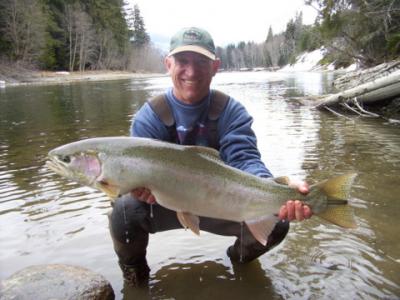
Fly fishing for steelhead fish can be a challenging and rewarding experience. These amazing fish share their heritage with the Atlantic and Pacific salmon. Although they are native to the West Coast of the United States as well as in Russia, they can also be found in the tributaries of the Great Lakes. This is because they were planted in the lakes many times in the 1800’s.

There are numerous places you can go when fly fishing for steelhead. As we’ve already said, they are most plentiful in the Western United States. You can find plenty of steelhead in the rivers of Northern California, Oregon, and Washington state.

Steelhead are cousins of the rainbow trout and have a decidedly chrome-like coloring. They are amazingly acrobatic and can provide any fly fisherman with a fulfilling challenge when trying to catch them.

Most of the fly fishing techniques used to catch steelhead are based on those historically developed to catch Atlantic salmon. Flies are cast downstream from the angler on a floating or sinking line. The take, which can sometimes be quite violent, usually occurs towards the end of the swing. You can also use nymphing methods usually used by trout anglers.

Winter steelheads are often considered the “hard core” of fly fishers, sometimes enduring hours of repeated casting in cold water and freezing conditions for that one tug that can occur when you least expect it. Many fly fishers will spend a lot of time trying to land that prized steelhead only to be frustrated near the end.

The main thing to keep in mind when fishing for steelhead is to practice a lot of patience. For people who fly fish for steelhead regularly, the success of a day consists of one good hook. You will not see big numbers of catches like you will on trout rivers. Keep a positive attitude and watch what the fish are doing.

Most steelhead pockets are found downstream, but other anglers know this as well. Steelhead are most plentiful in the cold, winter months, but you can often find several other fly fishers trying to fish the same spot in hopes of landing their fish. As you can imagine, this is not especially good for the fish or the fisherman. Practice appropriate etiquette when on the river fly fishing for steelhead.

You will probably need a 9 foot single hand rod or a 12-15 foot double handed rod for best results. Line weights should range from 7 to 9. The best flies to use when trying to land a steelhead include the Wooly Bugger, the Conehead Zuddler, and the Black Bear Green Butt.

Fly fishing for steelhead can be an amazingly gratifying experience when you are patient and wise when it comes to the natural patterns of these fish. When you are able to land one, you will be surprised at how much fun it is to reel it in!