domenica 29 maggio 2011

Finding Solitude While Fly Fishing in Montana

Finding Solitude While Fly Fishing in Montana

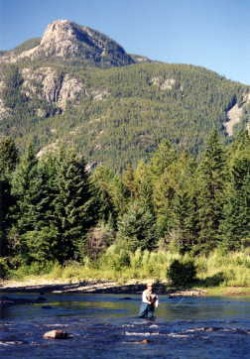
One of the best parts about the sport of fly fishing is experiencing the scenery and calmness around you as you are trying to land your big fish. Montana is a great place to find some solitude while fly fishing. In fact, the vast expanses that surround the rivers and streams in Montana can provide you with some of the most relaxing solitude anywhere.

Montana fly fishing is legendary. Anglers from all over the world travel to Montana to experience fly fishing the blue ribbon trout rivers and pristine mountain lakes. Whether an angler seeks to battle trophy sized wild rainbow trout on the Yellowstone River or to experience the solitude of a high mountain lake, Montana provides fly fishing experiences like no other place can.

Montana provides such an abundance of opportunities that visiting anglers frequently have difficulty in deciding where to start their fly fishing adventure. There are so many beautiful places in the hills of Montana that can provide both solitude and great fishing, many people might be overwhelmed. But so many choices provide for some amazing chances at bagging that championship fish!

For example, Lake McDonald in Glacier National Park is a beautiful spot for fly fishing. Flanked by mountains, this lake is not only a beautiful place to catch fish; it’s also an amazing spot for reflecting and relaxation.

Of course, the Yellowstone River is the longest river in Montana. It is free of any major dams, and its flow is not regulated in any way, so you can find an abundance of fish in the solitude of the mountain air. In fact, the Yellowstone River is internationally known as one of the premier trout rivers in the United States.

Even though you can expect to catch a variety of trout including rainbow and brown, you will also find whitefish and sturgeon aplenty. Even though the Yellowstone River is quite well known for its fly fishing in Montana, it is not overtaken by so many fly fishers that you can’t find a spot. It remains a beautiful secret available to those who are looking for the solitude of the Montana countryside.

Finding solitude while fly fishing in Montana is a relatively easy proposition. All you need to do is a little bit of research and ask around. Those who are proud of the fly fishing waters in Montana are always more than happy to share the beauty of their state with people who are wanting to fish the waters.

sabato 28 maggio 2011

Sage Fly Fishing Gear

Sage Fly Fishing Gear

The Sage company has been producing quality fly fishing gear for many years. They offer quality, top of the line fly fishing rods, reels, and lines to the beginning and experienced fly fisher. They take pride in the quality of their equipment producing rods and reels that many fly fishermen use exclusively.

They design and test their hand built gear with one thought in mind: maximum fishability. That term was coined by the company to represent the type of performance that will help you cast better, fish more effectively, and have more fun while fly fishing.

Their company offers the fly fisherman all sorts of advice and tips on how to select the right rod for you and what is important to look for in your fly fishing equipment. Sage rods and reels have long been the choice of many fly fishermen all over the world.

When you are just beginning to get interested in fly fishing, it’s easy to get frustrated at the amount of information you need to know. However, those same frustrations are also felt by experienced fly fishers that provides them with the challenge and excitement that makes the sport so compelling.

As we’ve said, Sage rods are hand built which makes them quality products. They manufacture nine different series of rods in a variety of models and sizes for every fishing situation. They have medium to ultra fast action rods to suit many types of fly fishers.

Their website, which can be found at www.sageflyfish.com also boasts many new product lines and accessories that all fly fishermen can use. They carry hats, t-shirts, rod and reel cases, fly lines, and much, much more.

Their new Z-Axis series of rods has breakthrough technology that is significantly stronger, lighter, and easier to cast. That makes this new line of rods great for beginners, and also experienced fly fishermen. They implement their exclusive Generation 5 technology that makes their rods unique and high end.

When you buy a Sage fly fishing rod, you are getting a quality piece of fishing gear. But that quality doesn’t come cheap. Rods range in price from $400 to $700, but they do come with a guarantee. Plus, if anything happens to your rod, they offer a rod repair service.

Many sporting goods stores and specialty fishing shops carry Sage fly fishing rods as do many online retailers. You can go to their website and click on the “Buy” link to find a retailer near you that carries their equipment.

Sage fly fishing equipment is well known in the fly fishing world as a trusted manufacturer of valuable fly fishing gear. Check them out for the best in the sport!

domenica 22 maggio 2011

Saltwater Fly Fishing


When you begin to venture into saltwater fly fishing, you are opening yourself up to a whole new fly fishing experience beyond any other. Obviously, saltwater fly fishing is done on the coastlines of the United States and internationally where the oceans are. Great saltwater fly fishing can also be found in the Gulf of Mexico off the coast of Texas and Florida.

When you are fly fishing in saltwater, you will be doing most of it from the comfort of a boat. The fish you will be catching are going to be larger than freshwater fish, and you will find many different species that can’t be found in rivers and streams. When saltwater fly fishing, you will be able to catch record size tuna, tarpon, seatrout, and mackerel, among other species.

The best fly rods to use would be those in the 8 ½ - 9 foot range meant to cast a 7 – 10 nwt line. Some fly fishers use shorter rods for tighter work, and longer rods when casting distance is important. When considering reels, the drag system becomes prime in importance because the size of the fish will require you to gain as much control over the reel as you possibly can.

When choosing your line, it is certainly a matter of preference. Some people like to have brighter colored lines for easier visibility while others think it’s important to go for blending when it comes to the line so the fish won’t shy away from it. Choose an appropriate weight for your fly rod and one that can handle the types of fish you are angling for.

When you are saltwater fly fishing, the tidal action is the engine that drives the atmosphere of the fish available. The tidal movements carry in different types of marine life that live in the channels as the tides roll in and out. Knowledge of the timing and strength of tides is essential to making a saltwater fly fishing outing both productive and safe.

Water temperature is another huge factor in saltwater fly fishing. When it is too cold, the fish are sluggish, when it is too warm, the fish are going to the cool spots. Look for waters that are tepid and you will find some huge fish that are trophy-sized and can provide an amazing experience.

Saltwater fly fishing isn’t for everyone, but it can be a great way to expose yourself to a new aspect of the sport. If you’re looking for a challenge, fly fishing on saltwater could be a great eye-opener for you. You’ll find prized game fish and be able to test your fly fishing skills in ways you can’t even imagine.

Fly Fishing in Canada

Fly Fishing in Canada

Canada is a beautiful place to visit. When you are planning a fly fishing trip, you’ll find an amazing adventure in Canada! Many of the rivers and lakes where fly fishing is the best are in remote areas, so when you choose fly fishing in Canada, you’ll have privacy with the added perk of some great fishing!

Some of the best fly fishing in Canada is found in the province of Ontario. There are many lodges you can choose from to stay at when you are there, but be warned that most of them are in very remote places where you are likely to be left alone with your party and can only get in and out by plane or train.

The Brown Bear lake system in Ontario is considered one of the best fly-in trophy smallmouth bass lakes in the area. The fish here average between two and three pounds, but four pound fish are common every season with some trophy wall hangers of 5-6 pounds being caught each year.

Norse Lake is a prime example of a remote Canadian fly-in wilderness lake. The lake is protected by a high, picturesque landscape that stays relatively calm even in windy weather. Here, you can catch beautiful walleye, Northern Pike, and smallmouth bass. Trophy sized fish are found every year, so fish this lake for some great opportunities.

Populus Lake offers twelve miles of beautiful water and land for you to explore when fly fishing in Canada. There are numerous channels and bays dotting this lake with all sort of landscape features like rock outcrops and weed beds which are prime breeding ground and hiding places for fish. This lake is situated in a very remote area with walleyes, trout, and Northern Pike in abundance.

Picture a cool, clear Canadian lake with lots of trophy sized smallmouth bass and Northern Pike and you’ll have Treelined Lake. This lake is so clear, you will be able to see the fish clearly near the shoreline. Wildlife is abundant here and it’s not uncommon to see a moose feeding on the shoreline in the twilight. You’ll find some real trophy sized fish on Treelined Lake with Northern Pike averaging over 5 pounds and smallmouth bass at 4-5 pounds.

Because so many fly fishing spots in Canada are located in remote locations, you’ll find peace and serenity during your fly fishing trip there. Enjoy the beauty of the Canadian wilderness while you catch the fish of your dreams. There are so many choices available to you that when you choose Canada for your next fly fishing trip, you’re sure to come away a winner either way!

sabato 21 maggio 2011

Fly Fishing Rod

Fly Fishing Rod

In the sport of fly fishing, your rod is one of your most important pieces of equipment. Fly rods come in various shapes and sizes, and which one you choose depends a lot on how you are going to be using the rod.

Fly fishing rods come rated in terms of the net weight they can handle (designated by nwt). That means if you are fishing waters for fish up to 8 pounds, you should use an 8 nwt rod. The higher the number, the bigger fish the rod will be able to handle.

Some rods are multi-rated (i.e. 8-10 nwt). These rods are good because they can handle a variety of situations, but you will sacrifice flexibility in the performance of the rod. A multi-rated rod is good for beginning fly fishermen because of it’s ability to adapt to various fishing scenarios.

Rods are made of three different materials: fiberglass, graphite, and bamboo. Fiberglass rods are the best choice for beginners. They are durable and considerably less expensive than the alternatives. Most fly fishing rods are made of fiberglass.

Graphite rods are a little more expensive, but they are lighter than fiberglass. They are better at casting than other rods and can handle many types of fishing situations. Graphite rods are strong so they’ll give you more fighting weight when trying to finish your catch.

Bamboo rods were the earliest rods used in the sport of fly fishing. Today, bamboo rods are quite expensive, but they are amazing strong and durable. These rods are suited for a slow, soft casting style associated with slow, leisurely fishing. Bamboo rods are very graceful, but they can be difficult to handle in certain situations, so this is not a good choice for beginners.

The length of your rod makes a difference as well depending on what type of fishing location you are in. Rods less than 8 feet long are good for tight, narrow places and areas with overhanging trees. Eight to nine foot rods are ideal for trout and bass fishing in open areas where you can get casting distance. Anything nine feet and over is for wide open waters and long distance casts. You can also use a nine foot and above rod for fishing from a float tube.

Put some thought into your fly fishing rod. While it’s not the only piece of gear that matters, it can be the one piece of gear that can help you bring in a monster fish or a baby fish. Think about what you want to accomplish on your fishing expedition and choose a rod that you help you achieve your goal.

mercoledì 18 maggio 2011

Fly Fishing Store

Fly Fishing Store

When you begin to get into the sport of fly fishing, you will want to find a store that carries a diverse amount of supplies. Look for a local sporting goods store or even a specialty fishing store to find what you need to get started.

Most fly fishing stores will carry many different brands of flies, rods, reels, and hooks that can meet all of your fishing needs. Many specialty stores will also offer classes on various subjects such as fly tying, casting techniques, how to find the best fish, and more. They will also often organize fishing expeditions for people to participate in.

You can find a variety of items in a quality fly fishing store. Many places strive to become a “one-stop shop” for its customers. They don’t want fly fishers to have to go to several different places to get their equipment, so they will carry a diverse amount of supplies such as waders, nets, and flies.

The great part about going to a local fly fishing store is that you will get good customer service from the employees there. Chances are very good that the reason they are working there is they also have a love of fly fishing, and some of them have a wealth of information to share.

If you have any questions about the sport, just ask. Most of the employees will be happy to share their knowledge with you. If they don’t have an answer to your question, they can find out what you need to know.

You can also find fly fishing equipment in stores like Wal-Mart and K-Mart. Keep in mind, however, that these stores probably will not give you as much assistance as you may get in a specialty store. They will, however, have cheaper prices, so if you’re on a budget but still want to buy your gear, they are good options.

If you don’t have a local fly fishing store, you may want to look online as there are many, many places for you to get your supplies from as well. Cabela’s, Bass Pro Shops, and Orvis all have online stores for fly fishing supplies. The sites are well organized and easy to navigate.

You can get all of your fly fishing supplies in a specialty store or on a specialty website. Always be on the lookout for specials and clearance items as you’ll be able to amass your gear quickly with a minimum of expense. Fly fishing stores are more than just retail outfits, they can offer you information, too, about this wonderful sport!

lunedì 16 maggio 2011

Fly Fishing Clubs

Fly Fishing Clubs

Fly fishing clubs are a great place to learn, apply, and share knowledge of a great outdoor sport. Fly fishing clubs are the best "hands on" resource if you are thinking of entering the fly fishing experience. If you want to learn more about casting a fly rod, how to tie fly's, how to make fly rods from blanks, or just have a great outdoor experience, check out a club in your area.

If you don’t have a fly fishing club in your area, you might want to access some of the resources available to you on the Internet. There are many places you can go to online where you will find camaraderie, advice, and tips about fly fishing.

Fly fishing clubs are often regional in nature. You can usually find a club that caters exclusively to residents of the state of Michigan or Washington. You can also find a fly fishing club that is geared toward beginning fly fishers or one that gives tips and advice about how to tie flies or the best casting techniques to use.

One of the greatest advantages of a supportive fly fishing club is the opportunity to go on fishing vacations with people you meet. When you get to know people who share your love of fly fishing, they are eager to co-mingle with other people who share their passion.

If you are a member of an Internet club for fly fishers, it can be fun to make plans to meet at a designated spot to get together for some well deserved R & R while fly fishing. You can find camaraderie and friendship by joining a fly fishing club plus, you can learn a lot about the sport from fellow club members.

When joining a fly fishing club, you can further your fly fishing education, practice conservation, and enjoy the company of some interesting people who share your interest in the sport. You can draw on each other’s knowledge and learn new things just by talking and participating in club activities.

Not only are there local clubs, but there are also national fly fishing clubs that you can become a part of. The Federation of Fly Fishers is dedicated to enhancing the sport of fly fishing for all species of fish. International Women Fly Fishers aims to educate women in the sport of fly fishing. Trout Unlimited is committed to the preservation of all cold water species and habitats.

Many people join more than one fly fishing club as the choices can be endless. If you are truly dedicated to the sport of fly fishing, joining a fly fishing club can truly enhance your enjoyment of this exciting and diverse sport!

mercoledì 11 maggio 2011

Fly Fishing Retailer

Fly Fishing Retailer

As one of the most important events in the sport of fly fishing, the annual Fly Fishing Retailer show has become a tourist attraction in and of itself. The 2007 show will take place September 16 through 18 in Denver, Colorado, at the Colorado Convention Center. What can you expect if you plan to attend this show?

At Fly Fishing Retailer, you will get meaningful interaction with other avid fly fishers as well as experts. If you have questions about fly fishing, just ask. There are many, many people on hand who are more than happy to answer any queries you have about this wonderful sport.

They offer tons of seminars on a variety of subjects. You can learn about fly tying, teaching others how to fly fish, what type of tackle to bring with you, and so much more. There is a casting pond where the experts can give you advice about your casting techniques and help you improve your casts for maximum efficiency.

Orvis sponsors a saltwater fly fishing cup where competitors vie for the $7,500 grand prize. All equipment is supplied by Orvis, and it is held on one of the casting ponds that are set up in the convention center. You cast for distance as well as accuracy.

Besides the seminars and activities, you will also find numerous companies exhibiting their fly fishing equipment. You will see some of the newest products from these companies and will also have the opportunity to purchase any of the equipment you are interested in.

There are over two hundred exhibitors set to be at the 2007 show including Sage, Orvis, Federation of Fly Fishers, Trout Unlimited, and many more. You’ll be able to see their products, ask questions, and even try out the gear before you buy it.

You will also get a lot of information about conservation efforts in various areas. It’s important to many fly fishermen to preserve the waters that they fish. Without conservation and respect for the land, the fish wouldn’t be plentiful and the sport would die. Experts will tell you the best preservation efforts to take about yourself as well as part of a group.

You will also find some famous authors who have written very popular books on the sport of fly fishing. You can mingle with them, ask them questions, and gain knowledge through their expertise on this great sport.

When you attend Fly Fishing Retailer, you will find more information than you ever thought possible. You will be introduced to many fly fishing products and gain insight into the sport that you love.

martedì 10 maggio 2011

Selecting Your First Balanced Fly Fishing Outfit


If you have decided to start fly fishing, one of the most difficult steps is the selection of your first outfit. To be a successful fly fisherman it is essential that each piece of your outfit works together in a comfortable and efficient way. When all the pieces work together, an outfit t is said to be balanced. The five essential pieces that make up an outfit include the line, rod, reel, leader, and fly.

Many people that are beginning fly fishing chose their line first. This is because it is necessary to choose the line weight. There are dozens of different types of lines for fly fishing. Picking the correct one is very important One of the main things to remember is that it is critical that the line weight designation in the code matches the one on the rod that is used. The most common type of line used by beginning fly fishermen is the double tapered line.

There are many types of lines including weight forward, shooting taper, level line and tapered line. The function of the line chosen for your first balanced outfit should be floating. About 95% of the time a floating line will fit your need when fly fishing. The weight of your first line will depend mostly on where you are going to fish.

When choosing you first fly fishing rod there are three main things to consider. These are the material the rod is made from, its length and its action. Fly fishing rods can be made from fiberglass, bamboo, graphite, or baron. Fiberglass is the least expensive material used to make a rod. However, it is losing some of its popularity because of its weight and required diameter. Bamboo, or cane, fly fishing rods are hand crafted works of art. Because of this they are very expensive. They also require a lot more care then a rod made from a synthetic material. The most popular fly fishing rod today is made of graphite. They are very light weight, durable, and are designed to provide the fisherman with any type of needed action. Rods made from baron are the most expensive of all the synthetic rods.

The reel that you choose for you first balanced fly fishing outfit will be one of three types: single action, multiplier, and automatic. A single action fly reel is a basic reel and should be the one chosen for your first balanced outfit. Multiplier and double action reels have their uses but neither should be the first one used for fly fishing.

In fly fishing, a fly leader is the little piece of monofilament line that is used to attach the end of the fly line to the to the fly. It is important to choose the correct leader to make sure that the power that is generated during the cast is transferred from the end of the fly line to the fly. There are many considerations when choosing the proper leader. These choices include whether the lead should be tapered or straight, knotted or knotless, how much it should weight, and the size of the tippet.

Choosing a fly for your first balanced fly fishing outfit will depend on many factors including where you are going to fish, the type of fish you are after, and your own personal preference.

Once you have chosen the five items that make up your balanced outfit for fly fishing you are ready to go out and cast your line and catch those fish.

sabato 7 maggio 2011

Fly Fishing Knots

Fly Fishing Knots

When you are fly fishing, tying the right knots can make a world of difference in your success or failure. It’s important to not only select the right knot for the situation but also to tie it properly. Poorly tied knots will mean lost fish and frustration for you, so knowing about the right knots and how to tie them can be a huge part of the fly fishing experience.

Before you tighten a knot, moisten it with saliva or with water you are fishing on. This will help the knot slide and seat properly. Lubrication also decreases excessive heat which can weaken the monofilament. Heat is generated by friction created when the knots are drawn up tight. Moistening the knot will reduce this heat and allow you to have good, strong knots.

Tighten knots with a steady, continuous pull. This is called seating the knot. Make sure the knot is tight and secure. To check this, pull on the line and leader to be sure it holds. It’s better to test its strength before you cast rather than to have it break once you get a hook.

There are plenty of books available that give step-by-step instructions on how to properly tie specific knots. You can also find many tutorials online that can show you how to tie specific knots.

You will need to know how to secure your line to the reel. This is called “Backing to the fly reel” and there is a specific knot as to how to achieve that. When you are backing to the fly line, you should use either an Albright Knot or a Nail Knot. The Nail Knot is also good for using when tying the fly line to the leader.

When securing the leader to the tippet, good knot choices include the Surgeon’s Knot or the Barrel Knot. Securing the tippet to the fly can be achieved easily with a Clinch Knot or a Duncan’s Loop.

It has been said that the weakest part of a fly fisherman’s equipment is his knots. A fighting fish will test every link in between the angler and itself. If one of these link is lacking, the line will break and the fish will be lost. Unless you’re really eager to share a “the one that got away” story, learning to tie knots can be the most important part of your fly fishing experience.

Some fly fishing knots are simple to do – others are a little more complicated. Practice tying knots before you get on the water. Become proficient at it and be sure you can do it in low light in case you have a broken line. There is no one knot best for any specific situation – the choice is personal. But when you are fly fishing, you need to depend on your knots and it’s worth taking the time to learn properly.

mercoledì 4 maggio 2011

Wisconsin Fly Fishing

Wisconsin Fly Fishing

Wisconsin is a great place for fly fishing, as many experienced anglers can tell you. Much of the state of Wisconsin was formed by glaciers passing through the area hundreds and hundreds of years ago. The best result from this glacial activity was the formation of many rivers and tributaries from the nearby Great Lakes.

That’s what makes fly fishing in Wisconsin so wonderful! Wisconsin fly fishing provides the most diverse trout fishing in the Midwest. The northeastern Wisconsin streams provide challenges in fly fishing that require the angler to wade for fish hidden behind big boulders. Southwestern Wisconsin streams provide a challenge for fly fishermen who have a lot of patience.

Streams in southwestern Wisconsin include Castle Rock Creek and Timber Coulee that support excellent fly fishing, natural reproduction, and mayfly and caddis hatches galore. The streams in this part of the state are spring creeks which support large numbers of fish, mostly Brown Trout, but they don't come easily. Dry fly fishing can be excellent but on heavily fished streams, emergers and lesser used flies can be more productive than standard dry flies.

For most streams in this area, anglers need to use light tackle, long leaders, and stealthy approaches. The streams tend to be narrow which makes casting accuracy much more important than casting distance.

Central Wisconsin is home to gin clear streams where you can see fish from where you stand. This area is known as “Sand Counties” because the landscape is extremely flat to gently rolling with very sandy soil. The streams run deep with little fish holding structures. To the untrained fly fisher, this might seem like a place where you wouldn’t want to fish. Nothing could be more wrong!

Stream structures are heavily used and deep holes are common particularly along the outside of a bend, and deadfalls and root wads can hold a lot of fish. This area is where stream structures were first devised. The water quality of these streams is excellent and helps support incredible natural reproduction. Wild Brook Trout are the most common fish but natural reproducing browns and even some rainbows can be found.

The freestone streams of Northern Wisconsin tumble violently over bedrock. The freestone rivers are home to the best pocket water fly fishing in Wisconsin. Casting a nymph or a dry fly attractor around the boulders is often a way to catch large numbers of fish. The meadow streams are favored by fishermen who enjoy fishing light leaders and small flies.

There are some amazing places you can fly fish in the great state of Wisconsin. You’ll be surrounded by rolling hills and grazing cattle as you try to land your next big fish. When you are an avid fly fisherman, you’ll find a wealth of fun and enjoyment in the streams of Wisconsin!

domenica 1 maggio 2011

Colorado Fly Fishing


Some of the most spectacular fly fishing in the United States can be found in the state of Colorado. In fact, when many people think of fly fishing, they automatically think of Colorado before anyplace else. It is true that Colorado has some amazing fly fishing places that have some trophy-sized fish in them.

The Frying Pan River is well-known as one of the best fly fishing rivers in the entire state. This is a beautiful river with easy access. Located just outside of Aspen, the Frying Pan is host to a variety of trout including rainbow, brown and cutthroat. There are year-round hatches making fly fishing in any season possible for the avid fisherman.

Another great river in the Aspen area is the Roaring Fork. This diverse river varies from small and calm to large and mighty in places. The river is classified as wild trout waters and is easily accessible down the Rio Grande Trail. As with the “Pan”, year-round fishing is available. You will find mostly wild rainbow trout in the Fork with an occasional wild brook trout.

The North Platte River was once used by pioneers to traverse portions of the West. Indians hunted buffalo along its shores, and its fish population has made it a legend among fly fishers. It is located in Northwestern Colorado and has been rated a gold medal river by experts. You will find many trout in the waters of the Platte and be able to enjoy some beautiful scenery at the same time!

In the Vail area, you can fish the Colorado River which is located in the Rocky Mountain National Park. This is a river that is mostly wide and deep with a gently moving current. Cottonwood trees line the shore providing many hiding spaces for the brown trout that are abundant in this water.

The Arkansas River is located in the southwestern portion of the state and provides some great trout fishing for anglers. Mid-winter is a great time to fish the Arkansas for trout as is the spring time. Around Mother’s Day every year, many fishermen descend on the Arkansas for the annual caddis hatch which is huge. Brown trout feed on caddis and they come “out of the woodwork” for this hatch.

These are only a few of the places where fly fishing in Colorado is plentiful. The countryside is gorgeous and the fish plentiful. There are also lots of great lodges that accommodate fly fishermen on a year-round basis. Fly fishing in Colorado might be the piece de resistance for many fishermen. Check out this great state and enjoy your adventure!